
Dengue fever

Dengue Fever
Introduction
Caused by mosquito-borne flavivirus, which is transmitted by Aedes aegypti & Aedes albopictus.
4 distinct serotypes: DEN-1, 2, 3 and 4
Each ep. of infection confer lifelong immunity towards the homologous serotype, but partial immunity towards other serotype.
Secondary infection is a major risk factor for severe dengue due to antibody-dependent enhancement.
Clinical course
Generally consist of 3 phases: Febrile phase –> Critical phase –> Recovery phase.
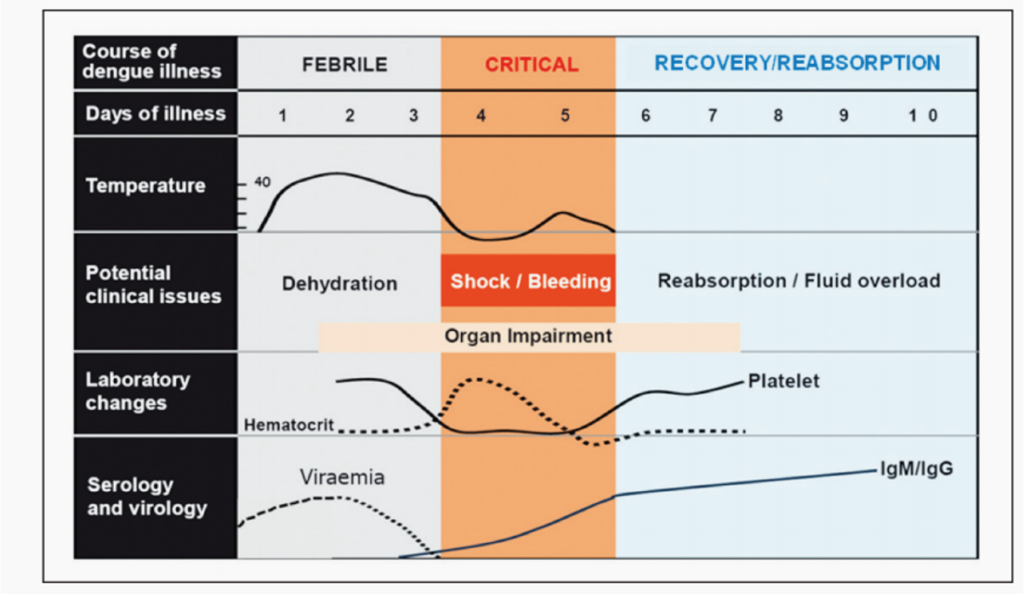
Febrile phase
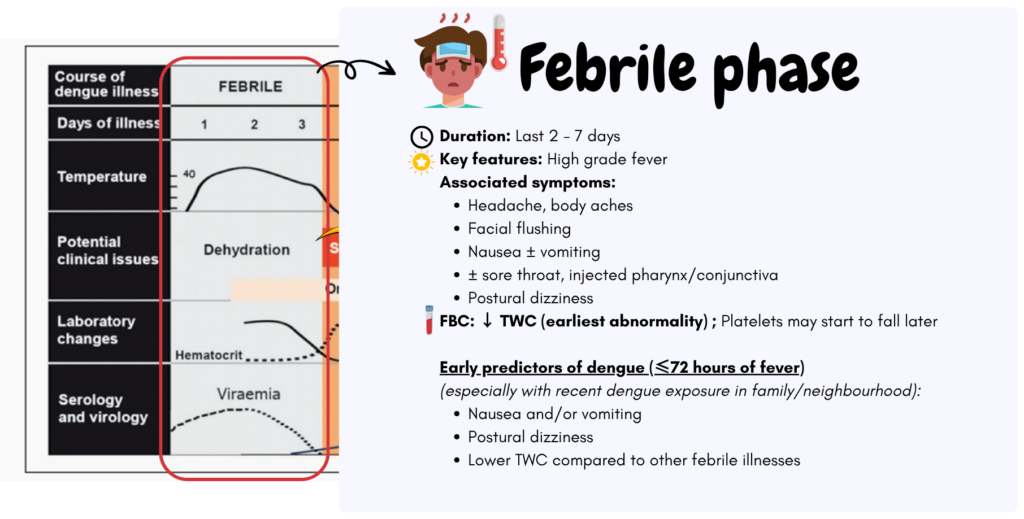
Critical phase
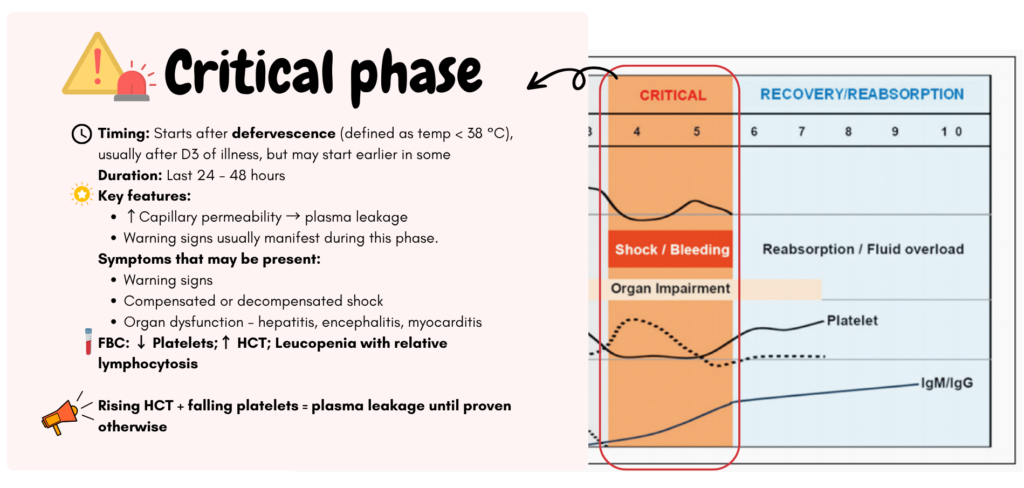
Recovery phase
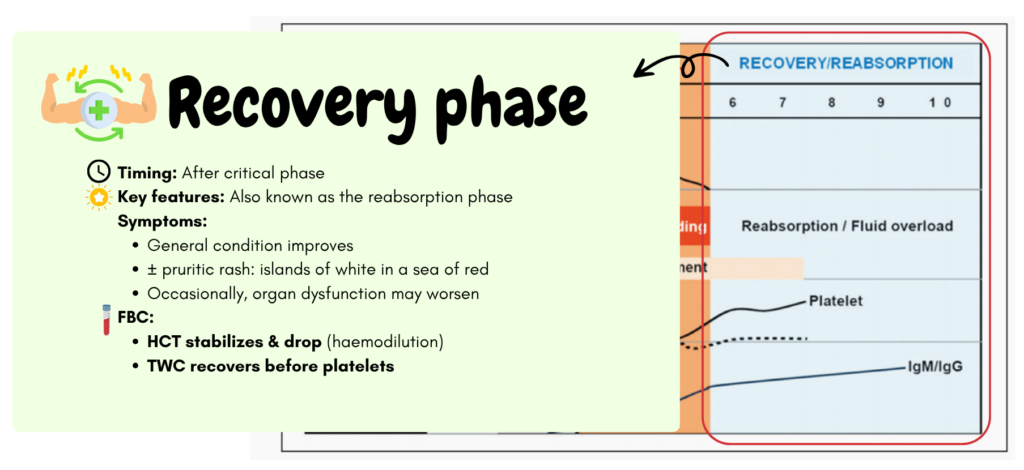
Possible complications in each phases
Febrile phase 🤒
- Dehydration
- High fever may cause neurological disturbances & febrile seizures in young children
Critical phase 🚨
- Shock from plasma leakage
- Severe hemorrhage
- Organ impairment
Recovery phase 💪
- Hypervolaemia & acute pulmonary edema (only if IV fluid has been excessive &/or extended into this period)
Dengue classification
Dengue was used to be classified as dengue fever, dengue hemorrhagic fever and dengue shock syndrome under the older WHO 1997 system.
However, the classification was then revised in 2009 by WHO.
The revised WHO classification (2009) classify dengue into:
- Dengue without warning signs
- Dengue with warning signs
- Severe dengue
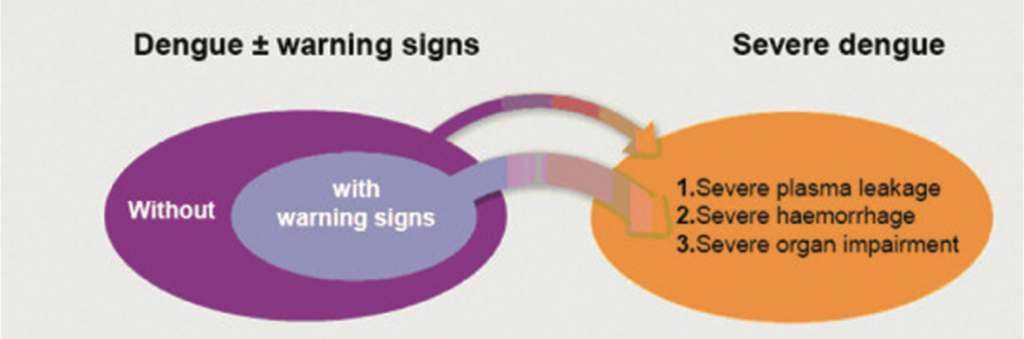
So how can we apply this classification into our clinical practice ?
1st step : Diagnosing dengue using the criteria for dengue which include history (probable dengue criteria) & lab test to confirm.
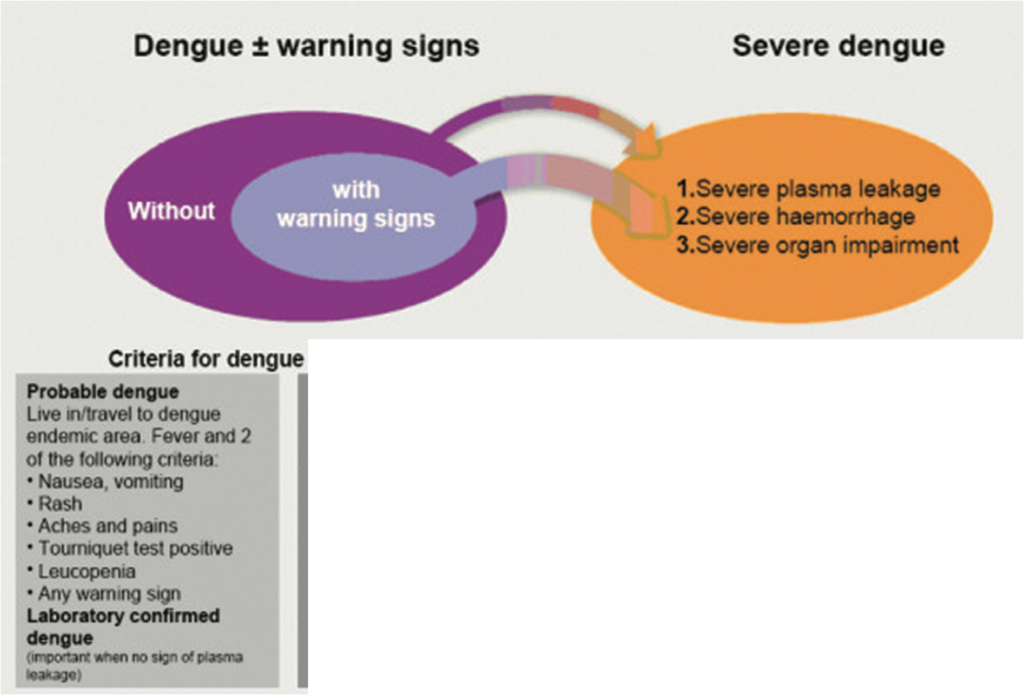
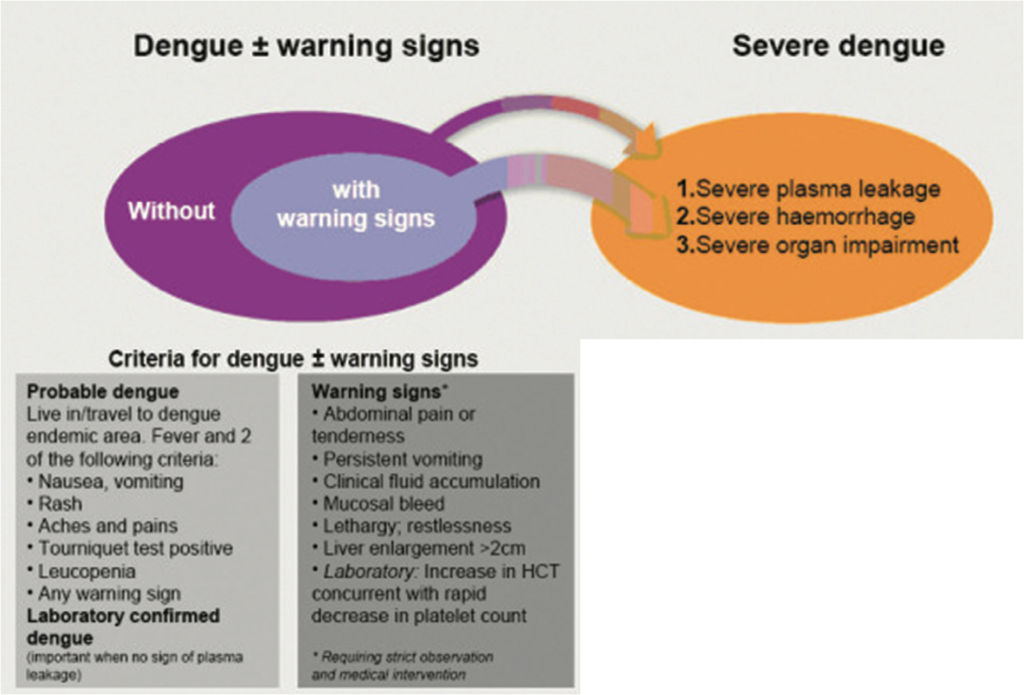
2nd step : Once dengue diagnosis is confirmed, assess for any warning signs.
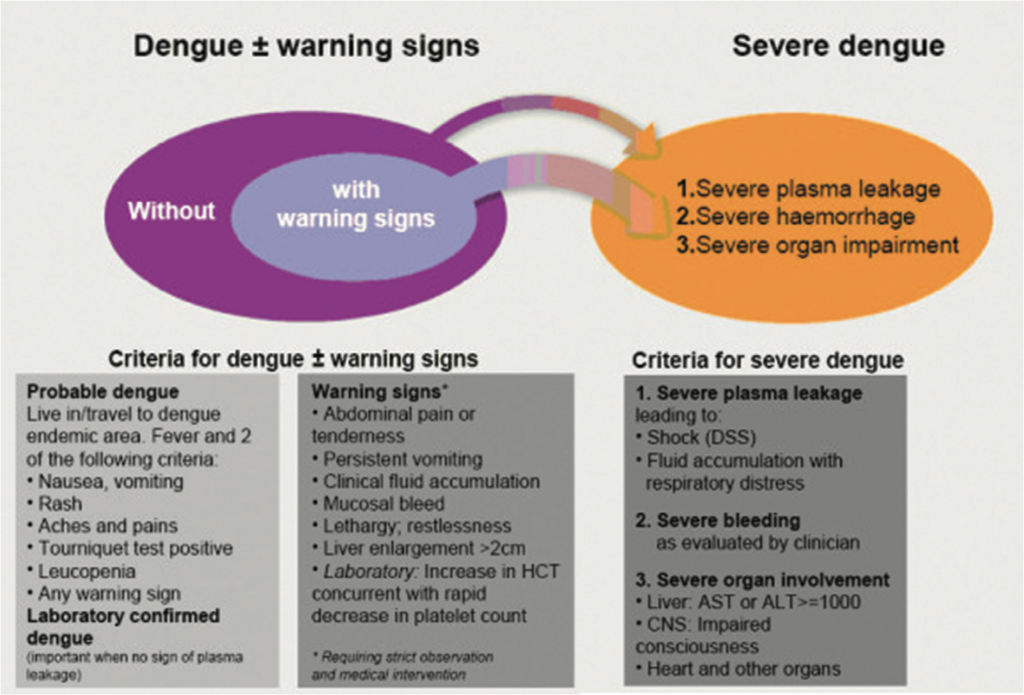
3rd step : Check if patient fulfilled any criteria for severe dengue
Approach to evaluation
1. Overall assessment – History, Physical examination, Investigation
2. Diagnosis, disease staging & severity assessment
3. Plan of management
History
Should include:
a. Date of onset of fever/illness
b. Oral intake
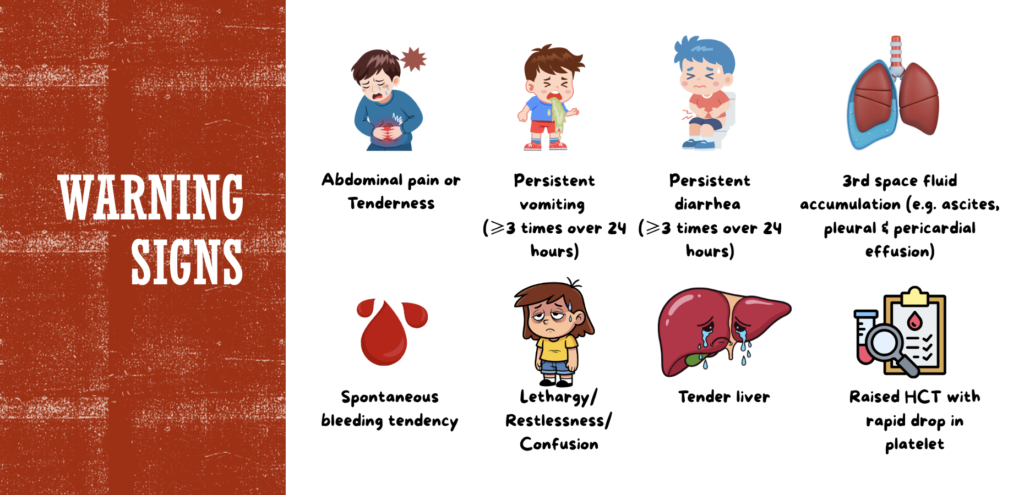
c. Assess for warning signs
d. Change in mental state/seizure/dizziness
e. Urine output (frequency, volume & time of last voiding)
f. Other important relevant histories
- Family or neighborhood history of dengue
- Jungle trekking & swimming in waterfall (Ddx – leptospirosis, typhus, malaria)
- Travelling
- Recent unprotected sex or IVDU (Ddx – acute HIV seroconversion)
- Co-morbidities (consider sepsis especially in diabetics)
The 3 golden questions 🏆
1. How much oral fluid is the patient taking ? (Quantity & Quality)
- Quantity – Not just a simple “yes” or “no” question, rather it is important to determine the actual volume being consumed.
- Quality – What type of fluids ? Is it just plain water or other types of fluid ? If patient drinks only plain water, they may be at risk of becoming weak & lethargic due to electrolyte imbalances. Instead, they are encouraged to take ORS, milk, fruit juices or even barley water.
2. How much urine output : frequency, volume, and time of most recent voiding.
- Urine output is considered the best indicator of whether fluid intake is sufficient.
- A patient should ideally pass urine at least 4 – 6 times per day.
3. What activities can the patient do during the illness ?
- If a person who normally watches TV or eats is now not doing anything but sleeping, it may be a sign of significant dehydration or electrolyte imbalance, even if they do not yet show the classic signs of shock.
Physical examination
1. Assess mental state & GCS
2. Assess hydration status
3. Assess hemodynamic status – CCTVR, BP and pulse pressure
4. Look out for tachypnea/acidotic breathing/pleural effusion
5. Check for abdominal tenderness/hepatomegaly/ascites
6. Examine for any bleeding manifestation.

It is known as The Magic Touch, because just examining & palpating the patient’s hand, 4 out of 9 of the parameters for shock can be assessed, these are the – Capillary refill time, Color & Temperature of the Extremities, Pulse volume & Heart Rate, all of which are indicators of patient’s peripheral perfusion status.
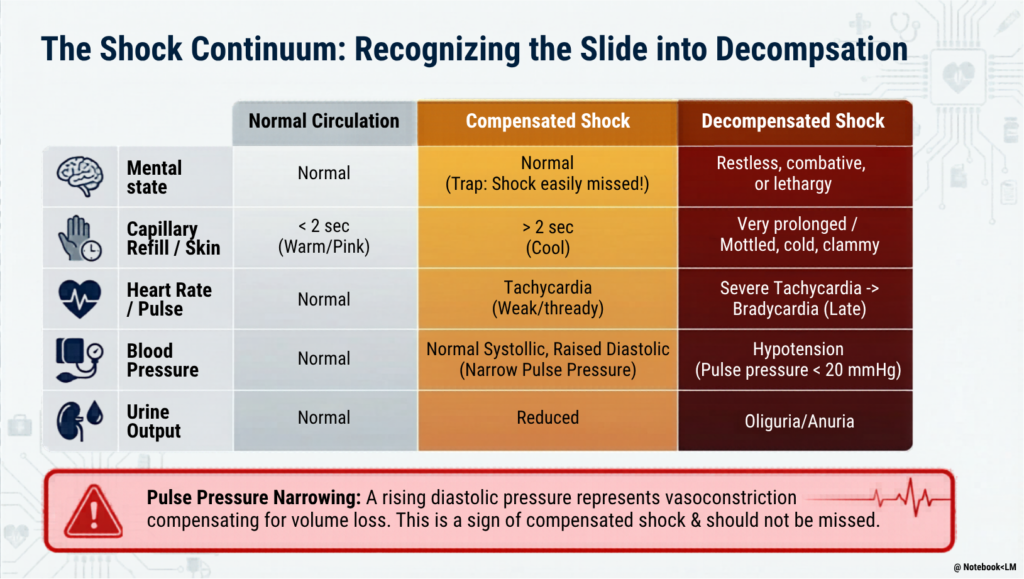
One of the dreaded complications of dengue fever is the development of shock especially in the critical phase.
Primary care plays an important role in detecting the early signs of shock as majority of the patients will be monitored daily at the primary care settings if they have no warning signs.“
It is important for primary care physicians to do a detailed physical examination, including the CCTVR.
Efforts should be put into detecting the signs of compensated shock, paying particular attention to the raised diastolic & narrowing pulse pressure as this represents an important clue, even though patient appears clinically well with a normal systolic pressure.
Investigations
1. Full blood count and HCT
- The early sign seen on FBC is leucopenia which is generally followed by thrombocytopenia.
- Baseline HCT, if possible should be obtained for comparison & monitoring of disease progression. A patient may have a high baseline HCT (e.g. in active smoker, COPD patients, etc.) and could be misinterpreted as a warning sign, thus monitoring the trend based on the baseline HCT whenever possible is preferable.
- If baseline HCT is not available, then the reference value of HCT based on age and gender can be used.
2. Diagnostic test – Rapid combo test, Dengue Viral RNA Detection (RT-PCR)
- The rapid combo test is often used in primary care settings to diagnose dengue fever.
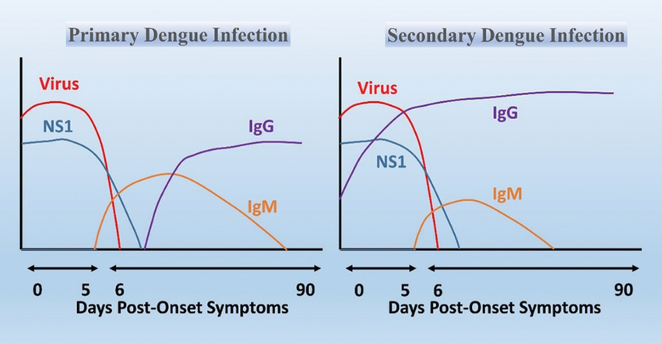
Understand the graph on the left is important to help us interpret the dengue serology/dengue combo test based on which day we perform the test post-symptoms onset.
For primary dengue infection
- We would expect NS1 to be positive if the test was done on Day 1 – 5 of illness. IgM may not be positive and IgG would not be positive.
- If the test is done after Day 5 of illness, we would expect IgM to be positive, and at this time, NS1 may not be positive anymore and IgG would often time be positive.
For secondary dengue infection
- If both NS1 and IgG are positive on test performed on Day 1 – 5 of illness, then it would indicate it is a secondary infection.
- Again, IgM would often be positive after D5 of illness.
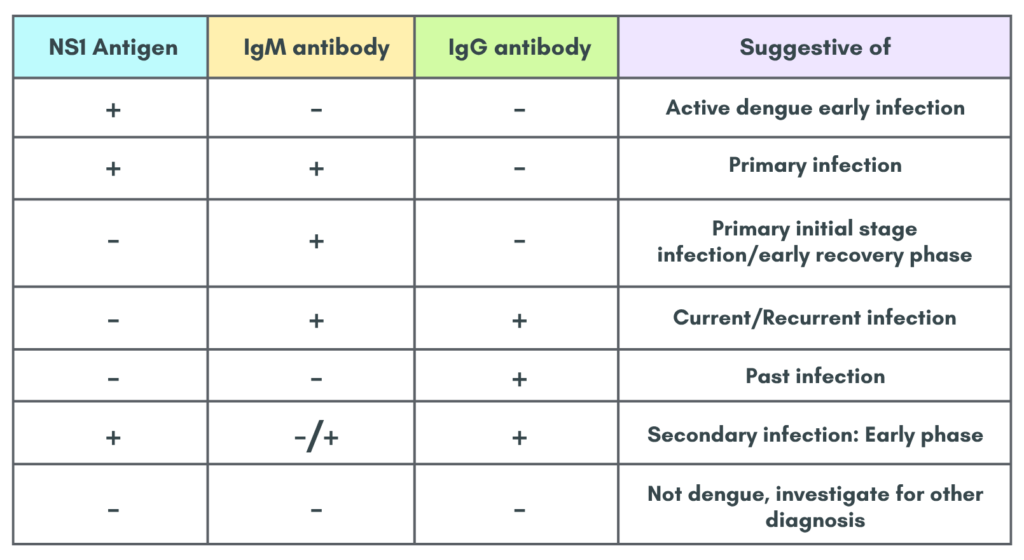
Quick interpretation of dengue combo
Diagnosis
At the end of the assessment, healthcare professionals should come up with the complete diagnosis based on :
- Diagnosis ? Day of illness ?
- Which phase ?
- Warning signs ?
- In shock/stable ? – Assessed by CCTVR & other hemodynamic parameters
- Severe dengue?
Example : Dengue fever D2 of illness, in febrile phase, no warning signs, not in shock.
Notification
Dengue is a notifiable disease.
All suspected & confirmed dengue must be notified via telephone/fax/e-notification to the nearest health district within 24 hours of diagnosis.
Management plan
In primary care, the decision for outpatient care or referral to secondary/tertiary centre should be made after a thorough assessment as above.
Criteria for Outpatient Care
- Able to tolerate orally well, good urine output (PU at least 4 – 6 times per day) and no history of bleeding
- Absence of warning signs
- Hemodynamically stable
- Investigations – Stable serial HCT
- No other criteria for admission – i.e. co-morbidities, pregnancy, social factors
Outpatient management plan
Patient should be followed up for daily assessment until they are 24 – 48 hours without fever.
Advise for outpatient care :
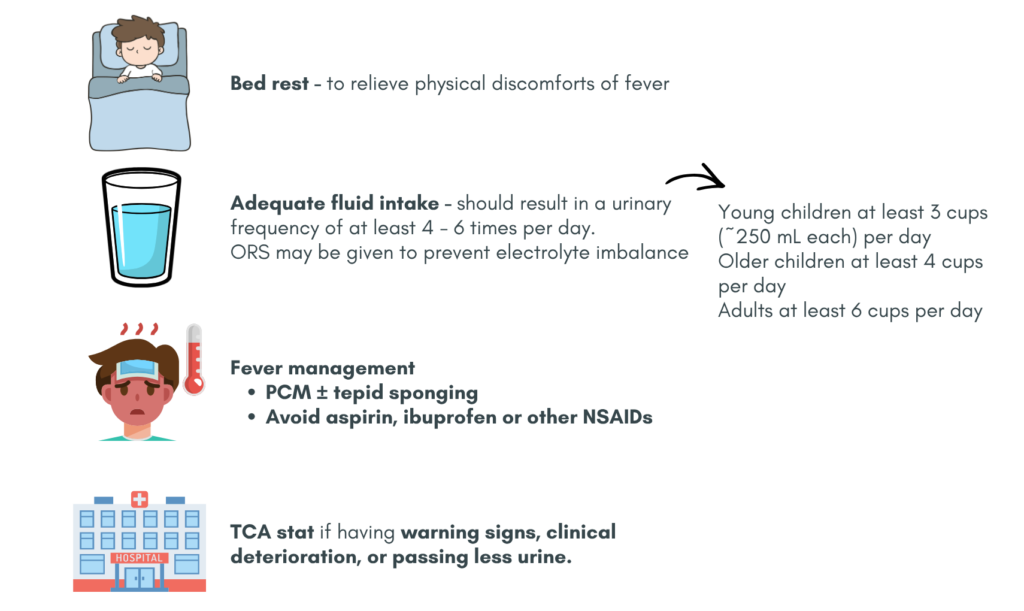
Regarding IV fluids 💧 in the febrile phase.
Exercise caution when administering IV fluids during the febrile phase, as plasma leakage may have already begun in some patients. Early IV fluid therapy, particularly with non-isotonic solutions, can increase the risk of fluid overload.
In addition, IV fluid administration during this phase may mask important FBC changes, such as a rising haematocrit (HCT), due to haemodilution. This may delay or obscure the early detection of patients with warning signs.
In general, oral fluid intake is preferred during the febrile phase unless there is a clear indication for IV fluid therapy.
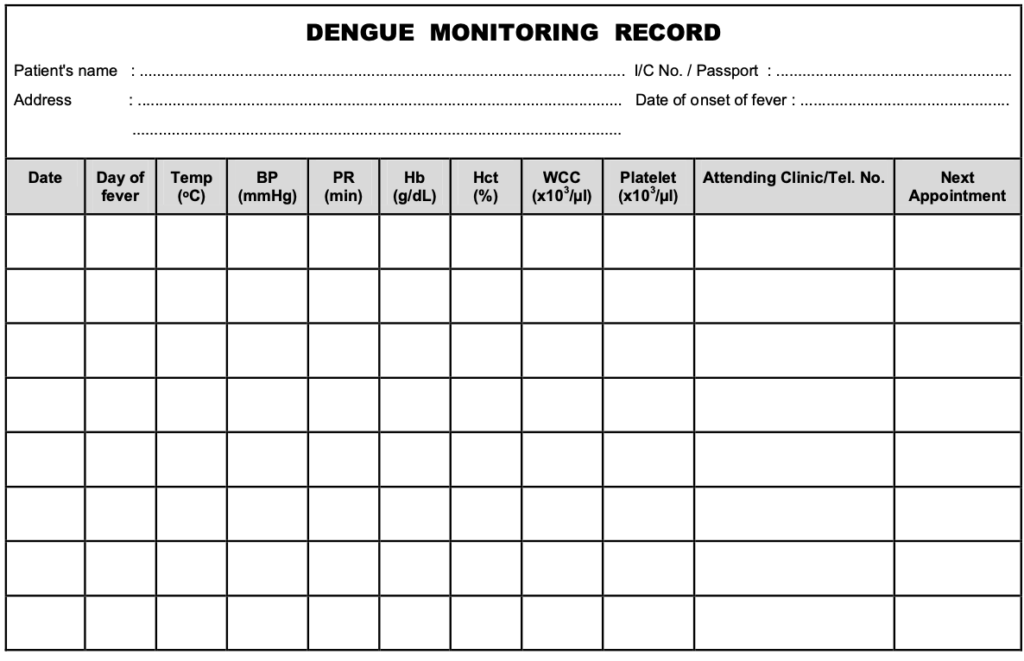
Daily assessment using the dengue monitoring record chart
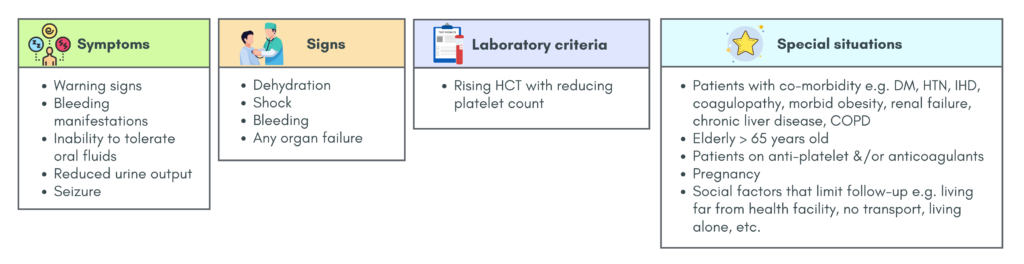
🚑 Criteria for referral
Vaccination
Vaccine is now available for dengue fever.
It is indicated for the prevention of dengue disease in individuals from 4 years of age.
Contains live-attenuated virus
Route: Subcutaneous
Administration:
- 0.5 mL at a two dose (0 and 3 months) schedule.
- Need for booster has not been established.
Contraindications:
- Hypersensitivity to any of the active substance in the vaccine or a previous dose of vaccine.
- Individuals with congenital or acquired immune deficiency, including those on immunosuppressive therapies such as chemotherapy or high doses of systemic corticosteroids (e.g., 20 mg/day or 2 mg/kg body weight/day of prednisone for two weeks or more) within four weeks before vaccination, as with other live attenuated vaccines.
- Symptomatic HIV infection or with asymptomatic HIV infection when there is evidence of impaired immune function.
- Pregnant women
- Breastfeeding women
References
- Ministry of Health Malaysia. (2015). Clinical practice guidelines: Management of dengue infection in adults (3rd ed.). Malaysia Health Technology Assessment Section, Medical Development Division, Ministry of Health Malaysia.
- Lum, L., Ng, C. J., & Khoo, E. M. (2014). Managing dengue fever in primary care: A practical approach. Malaysian family physician : the official journal of the Academy of Family Physicians of Malaysia, 9(2), 2–10.
- Dengue Prevention Advocacy Malaysia. (2025). Position paper on dengue vaccination (DPAM DVPP). Malaysian Paediatric Association. Retrieved from https://mts.org.my/resources/DPAM-DVPP.pdf
- Clinical course and principles of management of dengue – Prof Lucy Lum [Video]. YouTube. Retrieved from https://www.youtube.com/watch?v=33eFkCXyhhM
- The milder form – Primary care management – Dr Ho Bee Kiau [Video]. YouTube. Retrieved from https://www.youtube.com/watch?v=kCACdlK_pyQ&t=1230s