
ADHD
Attention-Deficit/Hyperactivity Disorder
(ADHD)
Introduction
ADHD is a neurodevelopmental disorder characterized by persistent symptoms of inattention &/or hyperactivity-impulsivity that interfere with daily functioning.
ADHD types :
- Predominantly Hyperactive-impulsive – Always on the go, talks a lot, restless mind
- Predominantly Inattentive – Easily distracted, often lost in thought, forget things
- Combined – Mixed of traits, distracted & restless, varies day to day
Note: ADHD may co-exist with other emotional, behavioral & learning disorders.
Age groups
For clinical assessment & management, children & adolescent are commonly categorized as follows:
- Preschool-aged children: 4 to under 6 years old
- Elementary & middle school-aged children: 6 to under 12 years old
- Adolescent: 12 to under 18 years old
For children under 4 years: Evidence is insufficient to recommend diagnosis or treatment of ADHD. However, Parent Training in Behavior Management (PTBM) may be offered which does not require ADHD diagnosis to be applied.
Risk factors
Biological
a) Gender : 3 times more likely to occur in male
b) Genetic factors : Children with ADHD are more likely to have a parent with ADHD. Multiple genes have been investigated e.g. DRD4, DRD5, DAT, SNAP-25 gene, etc.
Non-biological
a) Perinatal – preterm birth, low birth weight
b) Maternal/pregnancy related 🤰
- Smoking
- Poly-substance use e.g. heroin, alcohol, tobacco, amphetamines, benzodiazepines, cannabis
- Psychological stress
c) Excessive screen time 📱📺
- Watching television at a young age (< 3 years) has been found to be associated with attentional problems at age 7 years.
- Watching TV for > 2 – 3 hours daily during childhood & adolescents is associated with increased attention problems (based on longitudinal cohort data)
- Recommended screen time
– Under 2 years : Avoid screen exposure
– Young children (2 – 5 years) : < 1 hour/day, focusing on quality programming
– Older children & adolescent (6 – 18 years) : Discourage screen time exceeding 2 – 3 hours/day. (However, latest recommendation did not emphasize on fixed daily limit, rather it advised for balanced screen use without compromising sleep, physical activity, learning or social interaction)
Screening in primary care
A. Initial screening
TWO simples questions may be used to screen for ADHD in primary care or school settings (Sensitivity 91%, Specificity 82%) :
- “Is the child unable to pay attention?”
- “Is the child extremely active?”
If “Yes” to both questions ➡ further ADHD assessment is required.
B. Common signs & symptoms of ADHD
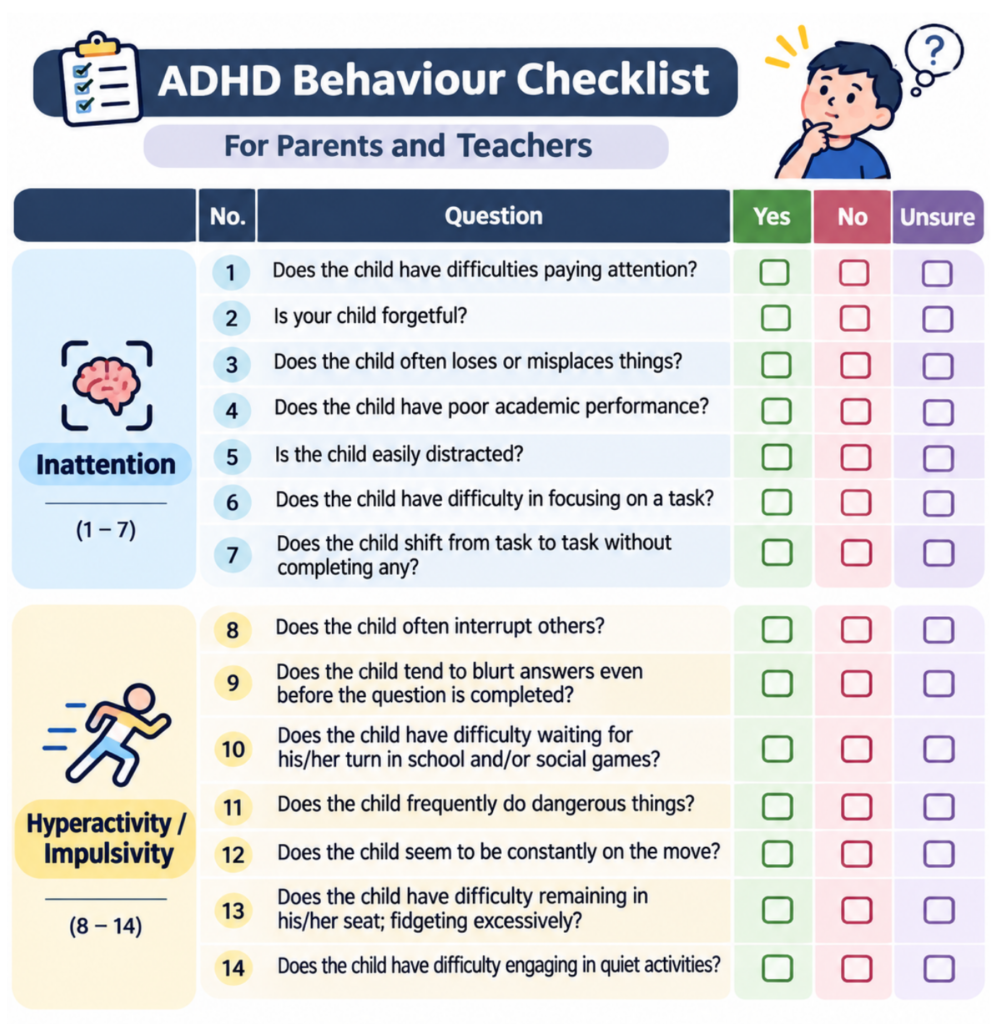
Inattention: Easily distracted, frequent daydreaming, forgetfulness, make careless mistakes
Hyperactivity-impulsivity: Difficulty sitting still, talks too much, impatience, impulsive or unnecessary risk taking.
Simplified ADHD behavioral checklist
C. Behavioral Rating Scales
Standardized rating scales may support ADHD screening & assessment by gathering information from parents, teachers & adolescents themselves.
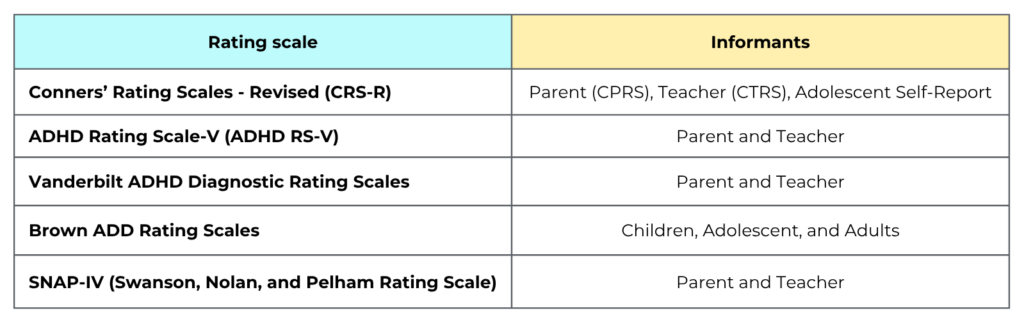
These has been recommended internationally but not validated yet in Malaysian setting, except for SNAP-IV where a Malay version is available & has been validated.
Diagnosis
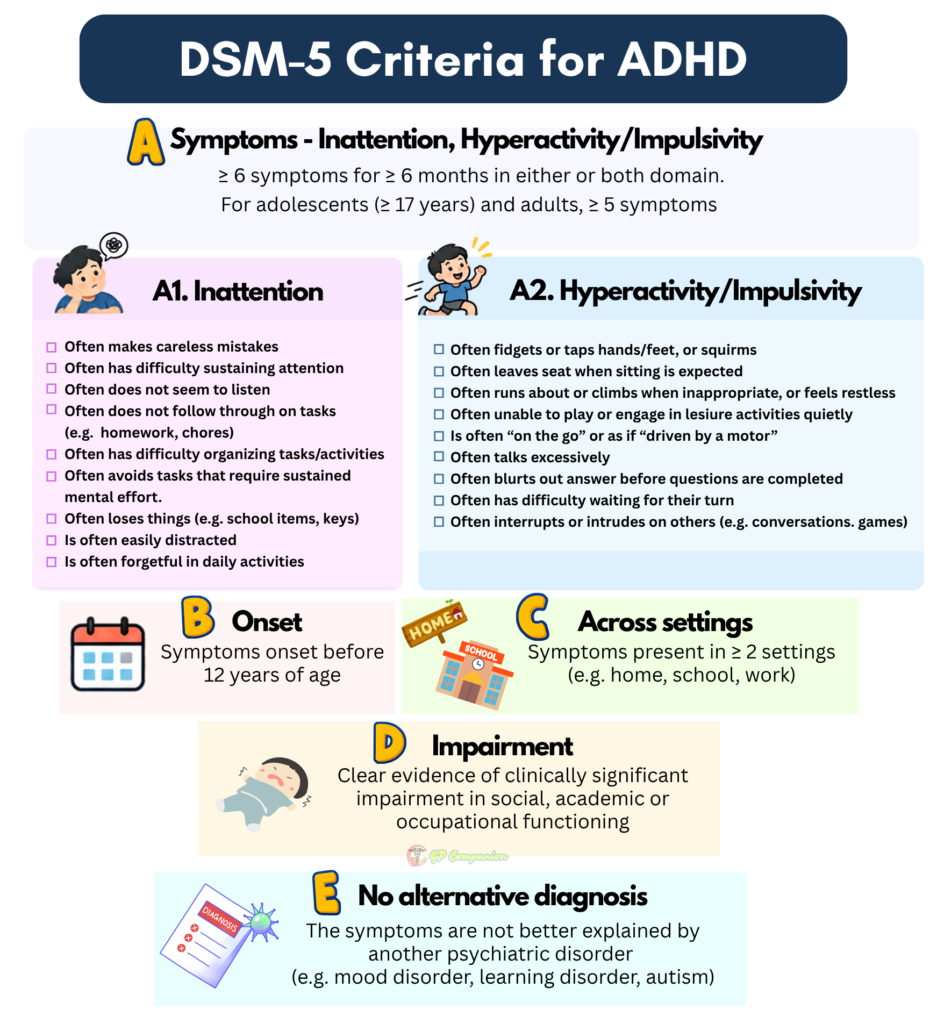
DSM-5 criteria for ADHD will be discussed here. Alternatively, ICD-11 may also be used.
The diagnosis is primarily clinical, based on :
- Clinical interview with parents, caregivers & teachers, supported by DSM-based ADHD rating scales.
- Physical examination & behavioral observation of the child.
Screening for Comorbidities
Children with ADHD should also be screened for any comorbid conditions (Grade B; strong recommendation), including :
- Emotional or behavioral conditions e.g. anxiety, depression, oppositional defiant disorder, conduct disorders, substance use
- Developmental conditions e.g. learning & language disorders, autism spectrum disorders
- Physical conditions e.g. tics, sleep apnea
Comorbidities may influence ADHD treatment & may require additional management alongside ADHD itself.
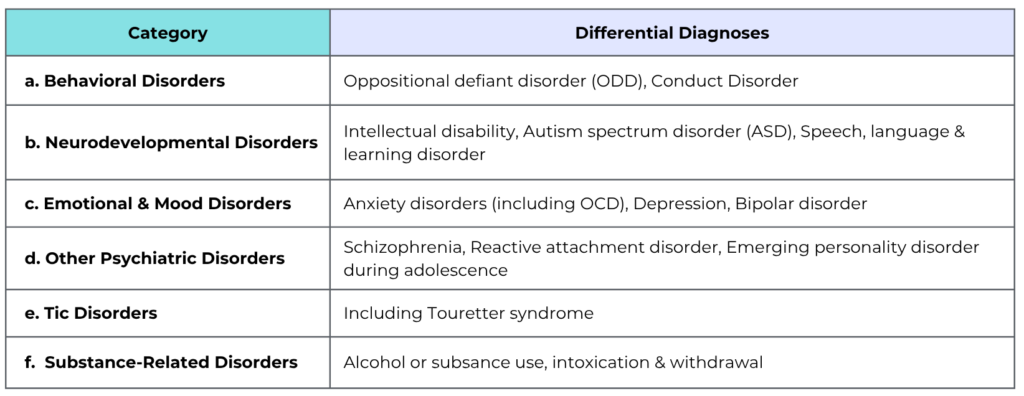
Differential diagnosis
A. Psychiatric & Developmental Disorders
B. Medical conditions
- Medical/Neurological : Hyperthyroidism, Epilepsy
- Medication-related: Anti-asthmatics, anticonvulsants, sympathomimetics, antihistamines, steroids
C. Psychosocial factors
- Child abuse, neglect or trauma
- Family conflict, divorce or parental separation
- Grief or significant life stressors
Clinical consideration: ADHD may coexist with these conditions. Identifying another condition does not necessarily exclude ADHD.
Management of ADHD
Goal : To improve symptoms, learning, social interactions & self-worth/self-esteem.
Consist of pharmacological & non-pharmacological treatment.
In view of difficulties with diagnosis and management, preschoolers with ADHD should be referred to a child psychiatrist or pediatrician.
Non-pharmacological management
1. Psycho-education
- Involves educating the parent & child about ADHD & general advice to help improve the child’s academic & behavioral functioning.
- Recommended by many guidelines despite limited research on its effectiveness.
2. Parent training in behavioral management (PTBM)
- 1st line intervention for preschool-aged children, including those with ADHD-like behaviors without a confirmed diagnosis.
- PTBM has documented effectiveness with a wide variety of problem behaviors, regardless of etiology.
- Key points :
– Teaches parents behavioral strategies to encourage positive behavior in the child.
– Helps establish clear, consistent and predictable rules, routines & consequences.
– May improve child’s behavior, academic performance, parental coping & stress.
– Should be combined with medication therapy wherever possible.
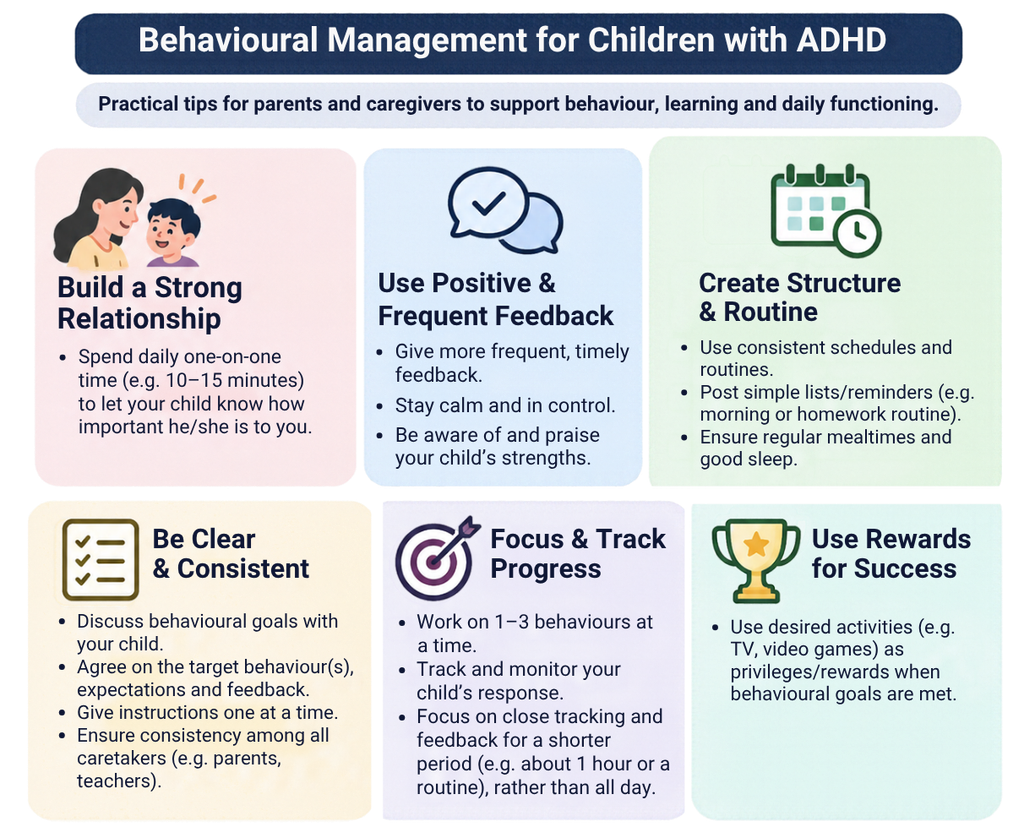
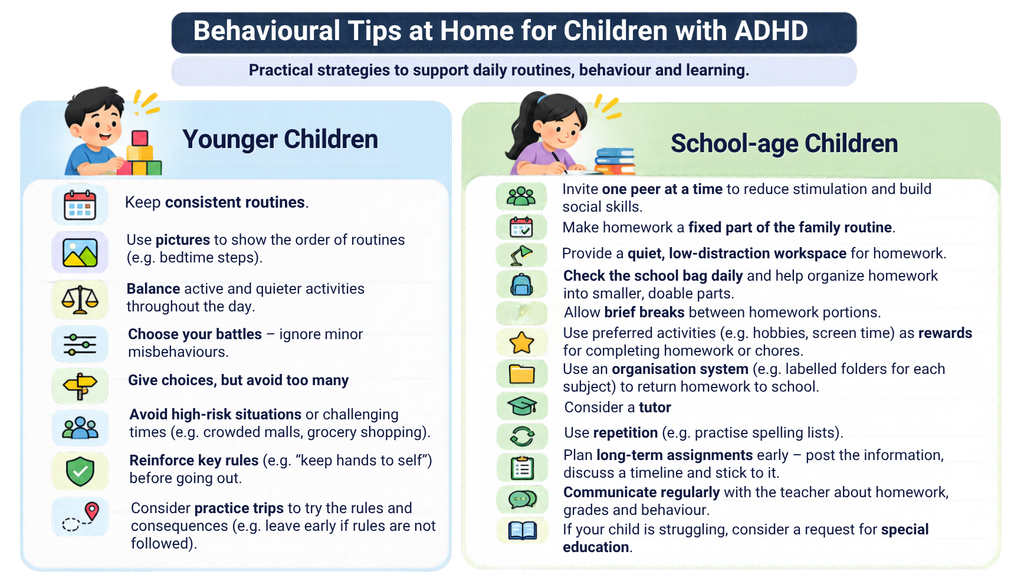
Advice on behavioral management (as given in Malaysia CPG, adapted from University of Michigan)
General advice
Home tips
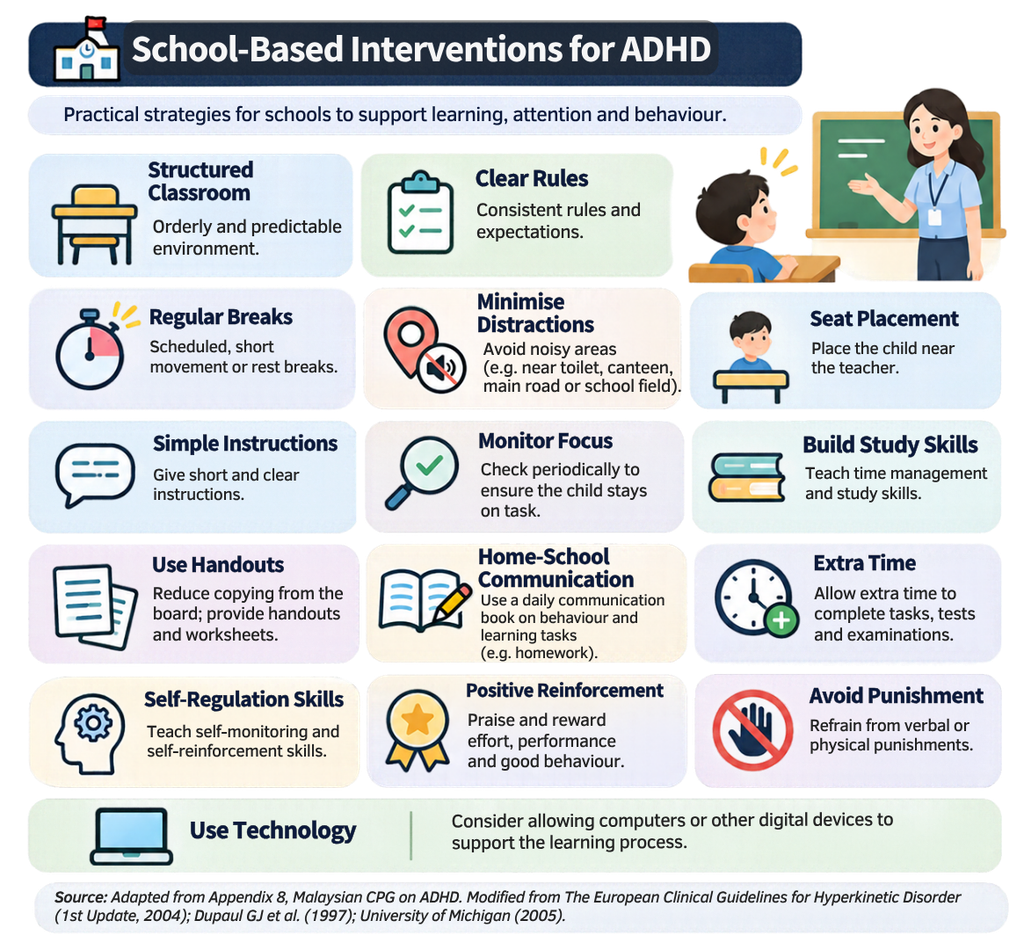
3. School-based interventions
- Aim to improve academic, organizational & social skills through active participation of the teachers.
- Includes strategies like self management interventions & token reinforcement.
- In Malaysia, structured school-based ADHD programs remain limited, highlighting the need for such programs to be made available whenever possible.
4. Occupational therapy (OT)
- To help improve daily living skills, attention, impulse control & be engaged at home and at school.
- Despite limited supporting evidence, OT may offer benefits in improving activities of daily living & social functioning in children with ADHD.
5. Support group – for parents & patients
Pharmacological management
Include :
- Stimulants – main treatment
- Non-stimulants – e.g. atomoxetine, anti-depressants, neuroleptics & others.
A. Stimulants
MOA: Inhibit dopamine reuptake by binding to dopamine transporter –> increased levels of extracelllular dopamine.
Examples: Methylphenidate (MPH), Dextroamphetamine, Mixed amphetamine salts
- MPH is the most commonly prescribed stimulant, available in short-acting, intermediate acting & extended release formulations.
- Dextroamphetamine & mixed amphetamine salts are not registered in Malaysia.
Cardiovascular safety 🫀
- Sudden cardiac death is very rare, with risks comparable to the general population.
- Nevertheless, a careful CV history is essential before starting treatment, particularly for underlying cardiac conditions (e.g. cardiomyopathy, arrhythmias, prolonged QT syndrome) and family history of sudden cardiac death.
B. Non-stimulants
An alternative options when stimulants are contraindicated, poorly tolerated, or ineffective.
Include :
1. FDA-approved non-stimulants
- Noradrenergic reuptake inhibitor – Atomoxetine (first line for non-stimulant)
– May be considered for ADHD patients with active substance abuse problem, those with severe side effects to stimulants, tics, Tourette’s disorder, mood lability or comorbid anxiety.
– However, its efficacy is inferior to MPH. - Selective alpha-2 adrenergic agonists: extended-release guanfacine, extended-release clonidine
2. Non-FDA approved/Off-label options
- Tricyclic antidepressants (TCAs) – require cardiac evaluation when using due to risk of cardiac toxicity.
- Neuroleptics (e.g. haloperidol, chlorpromazine & risperidone) – usually used in ADHD patients with comorbid mental retardation or autism.
Age-Based approach in ADHD management
Child < 6 years old
First line: Non-pharmacological interventions
- Behavioral intervention/PTBM – recommended if available
- Psychoeducation
- Occupational therapy
- Speech therapy
When to consider medication?
Methylphenidate (MPH) may be considered (“off-label”) if failed non-pharmacological treatment & there is moderate-to-severe continued disturbance.
Severity criteria are :
- Symptoms that have persisted for ≥ 9 months.
- Dysfunction that is manifested in both home & other settings (e.g. preschool or child care)
- Dysfunction has not responded adequately to PTBM.
Clinicians should weigh the risks of pharmacotherapy against the potential harm of delaying treatment.
Children aged 4–5 years metabolise MPH more slowly; Thus, start at a low dose with gradual, smaller increments.
Evidence on maximum MPH doses and other ADHD medications in preschool children are limited.
Children ≥ 6 years old
Treatment options include :
i) Pharmacological – Stimulant (MPH, amphetamine) & non-stimulant (Atomoxetine, Clonidice)
Recommendation for pharmacological treatment:
- Stimulants or atomoxetine should be used.
- Long-acting stimulants or atomoxetine should be considered due to convenience, adherence & stigma reduction.
- When stimulants or atomoxetine do not produce response or have serious side effects, TCAs or neuroleptics may be considered.
- Reassess the diagnosis and management plan if treatment response remains unsatisfactory.
ii) Non- pharmacological – PTBM &/or behavioral classroom intervention (preferably both)
Combination treatments
Studies have indicated that behavioral therapy has positive effects when it is combined with medication for pre-adolescent children.
Medication + Behavioral therapy ➡ Lower stimulant dosage ➡ Possible reduced risk of adverse effects.
Follow up
Monitor
- Height, weight, BP, pulse
- Emergence of comorbidity & medical conditions
- Target outcomes (using parent and teacher rating scale) & adverse effects.
Stimulants may cause mild increases in BP and pulse rate (usually insignificant), though there may be more substantial increase in some children; hence, regular monitoring is recommended. They may also cause mild growth suppression (but long-term height effects are generally small), particularly during the first 2 years, warranting regular height & weight monitoring.
Frequency of follow up should be individualized & dependent on response to management, medication & psychosocial interventions.
Intervals between visits may be increased when patients are :
- Symptom free
- Meeting desired outcome measures
- Without serious side effects
- Without significant academic difficulties
Treatment should continue as long as the symptoms persist & cause impairment.
May consider stopping medication if child/adolescent :
- Being symptom-free for at least 12 months while on medication, and
- Not deteriorating, or have symptoms re-emerging when doses are missed or reduced
- Being able to concentrate while not on medication
For many individuals, ADHD causes symptoms & dysfunctions over long periods of time, even into adulthood.
Available treatments address symptoms & function but are usually not curative.
It is found in prospective studies that whether patients with ADHD are treated or not, they are at increased risk of early death, suicide, & increased psychiatric comorbidity.
Treatment discontinuation further places them at higher risk for catastrophic outcomes e.g.
- Motor vehicle crashes
- Criminality, including drug-related crimes
- Violent reoffending
- Depression
- Interpersonal issues
- Other injuries
Referral
a) From teacher/primary care to pediatrician/psychiatrist, if there is :
- Suspicion of ADHD
- Management difficulties
b) From pediatrician/psychiatrist to child psychiatrist/clinical psychologist, when :
- There is uncertainty about diagnosis
- Managing preschoolers
- There is a lack of response to treatment
- Prominent comorbidities exist (e.g. substance abuse)
- Severe side effects of medication are present.
References
- Ministry of Health Malaysia, Malaysian Psychiatric Association, & Academy of Medicine Malaysia. (2008). Clinical practice guidelines: Management of attention deficit hyperactivity disorder in children and adolescents.
- Wolraich, M. L., Hagan, J. F., Jr., Allan, C., Chan, E., Davison, D., Earls, M., Evans, S. W., Flinn, S. K., Froehlich, T., Frost, J., Holbrook, J. R., Lehmann, C. U., Lessin, H. R., Okechukwu, K., Pierce, K. L., Winner, J. D., Zurhellen, W., & Subcommittee on Children and Adolescents with Attention-Deficit/Hyperactive Disorder. (2019). Clinical practice guideline for the diagnosis, evaluation, and treatment of attention-deficit/hyperactivity disorder in children and adolescents. Pediatrics, 144(4), Article e20192528. https://doi.org/10.1542/peds.2019-2528