
Breast Cancer Screening

Breast Cancer Screening
Risk category
Women are generally evaluated for their risk of breast cancer, which helps determine the appropriate screening protocol.
Risk category can be divided into:
- General population
- Individuals with high risk of developing breast cancer
A. General population
These are women with:
- No personal history of breast cancer
- No strong family history of breast cancer
B. Individuals with high risk of developing breast cancer 🚨
These are women who fulfilled any one of the below:
- Personal history(s) of breast cancer
- Diagnosed BRCA mutation
- History of chest irradiation at young age
- 1st degree relatives of BRCA carrier who have not been tested
- Strong family history of breast or ovarian cancer:
– 1st degree relative: father, mother, siblings, children
– 2nd degree relative: grandparents, aunties, uncles, nephews, nieces
This risk stratification approach is more appropriate for our local setting and will be referred to for the subsequent screening protocol.
Alternatively, NICE recommend risk stratification using the BOADICEA risk assessment tool. However, this risk assessment tool has not been widely validated in Malaysia.
Screening Modalities
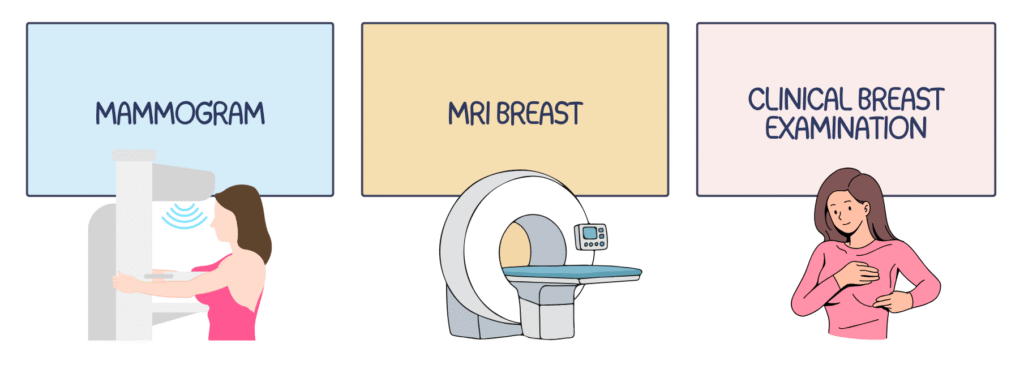
A. Mammogram
Recommended age for screening:
- General population: Start from age 50 up to 74 years old
- High risk individuals (with no genetic variant): Start from age 40. (May also be considered from 30 years of age)
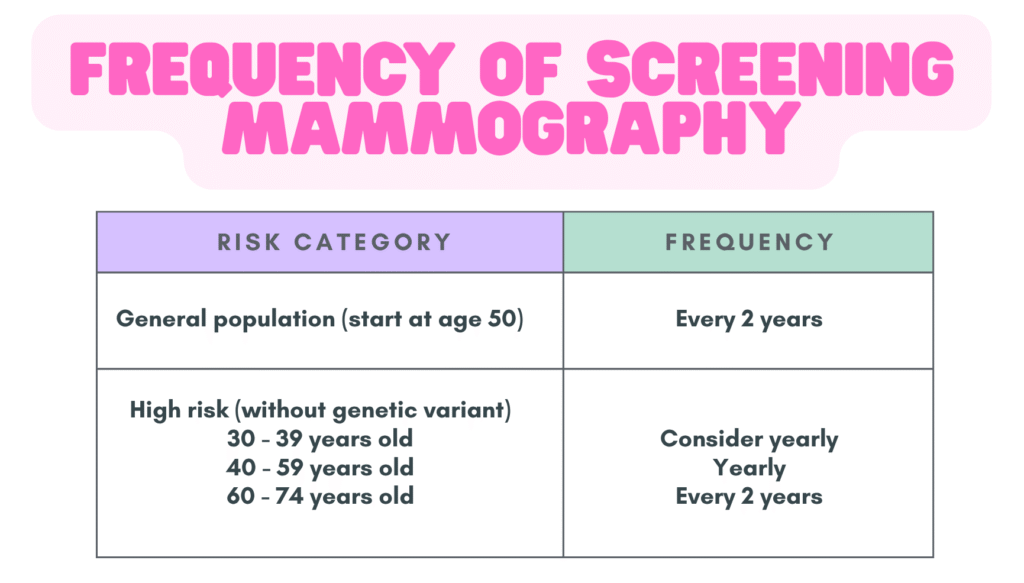
Facilities that have mammogram include:
- Majority of public tertiary hospital
- LPPKN clinic (also known as Klinik Nur Sejahtera LPPKN) – available in most state
- University hospital, Army hospital
- Private hospital
B. MRI Breast
May be used for carriers of pathogenic or likely pathogenic variants in BRCA1, BRCA2, and PALB2, especially for the age group of 30 – 49 years.
Screening for carriers of pathogenic or likely pathogenic variants in BRCA1, BRCA2, and PALB2
30 – 49 years old : Annual MRI should be offered
40 – 69 years old : Annual mammogram
≥ 70 years old : Mammogram every 2 years (biennially)
C. Clinical Breast Examination (CBE)
CBE refers to breast examination done by healthcare staff.
Although not a screening tool, it has an important role, particularly in opportunistic early detection of palpable cancers.
Recommended to start at 30 years of age (35 years in CPG).
- For those < 30 years, CBE can be done if requested by the individual.
Frequency of CBE according to risk:
- Individuals with high risk – 6 to 12 monthly (6 monthly is recommended)
- General population – once every 2 years
Health facilities that provide such service include:
- Klinik Desa
- Klinik Kesihatan
- Klinik Kementerian Pertahanan
- LPPKN
- NGO e.g. National Cancer Society Malaysia, Breast Cancer Welfare Society
- Private healthcare facilities
In addition to CBE, Self Breast Examination should also be advocated to promote breast cancer & empower women to take charge of their own health.
Regarding Ultrasound Breast
Used as a complementary imaging tools after abnormalities are detected on mammography or breast MRI.
Not recommended as a primary screening tool.
Referral
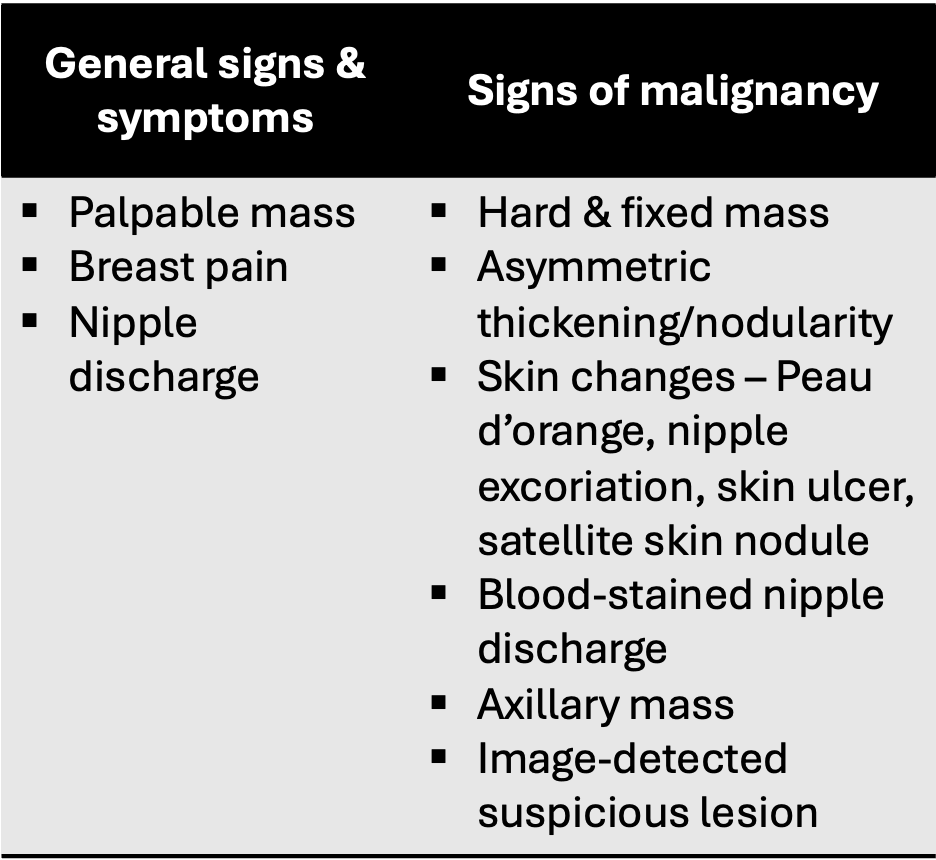
Patient with any of the following conditions should be referred early (within 2 weeks) to breast or surgical clinic for further evaluation:
- Women > 35 years with signs and symptoms
- High risk group with signs and symptoms
- Patients with clinical signs of malignancy
References
- Kementerian Kesihatan Malaysia. 2024. Garis Panduan Program Pengesahan Awal Kanser Payudara Kebangsaan Di FasilitiKesihatan Primer, Edisi Kedua.
- Ministry of Health Malaysia. 2019. Clinical Practice Guidelines, Management of Breast Cancer, Third Edition.